What Is Alkaline Hydrolysis?
Interest regarding alkaline hydrolysis has been growing, and for good reason. A gentle process that reduces the body to its basic organic building blocks, aquamation, also known as water cremation, is a technologically sustainable and cost-efficient alternative to traditional cremation.
So what is alkaline hydrolysis? Now, we explore the process and the benefits.
Aquamation = alkaline hydrolysis
Aquamation has many names, including water cremation, flameless cremation, biocremation, or liquid cremation. But regardless of the name, the process remains the same: an alkaline water solution breaking down chemical bonds at the atomic level, in what is known as alkaline hydrolysis.
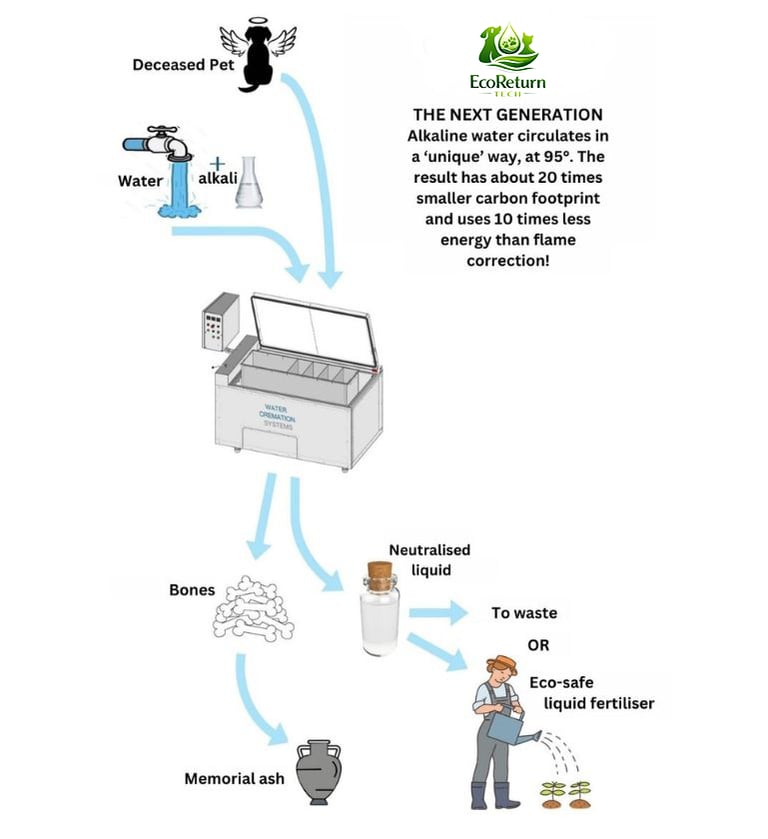
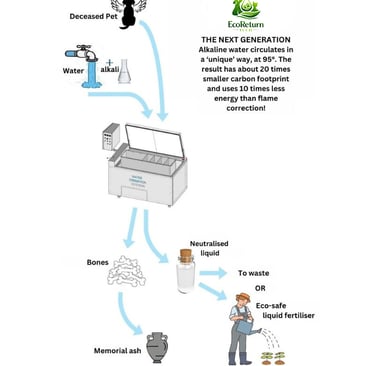
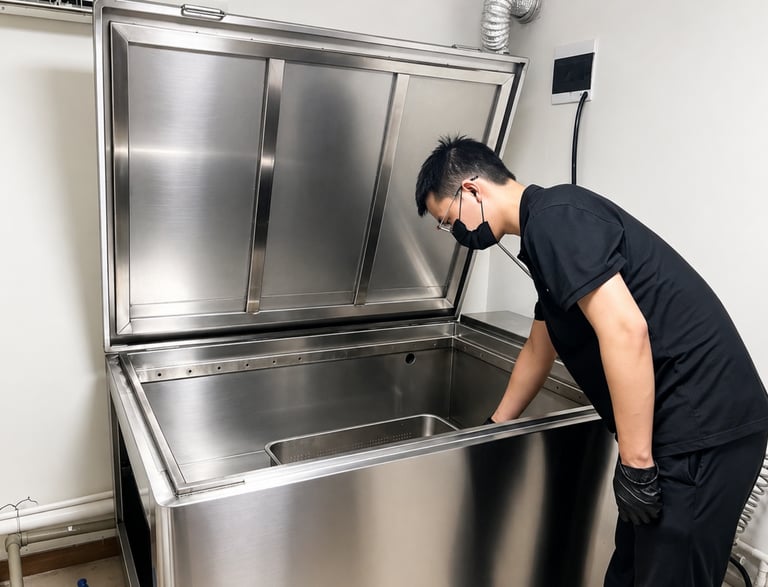
In the aquamation process, the first step is to place the pet in a chamber within the alkaline hydrolysis machine.
The next step is to fill the chamber with an alkaline solution, a mixture of water and chemical powders to submerge the pet.
The liquid is then heated, breaking the body down into its chemical components. The level of agitation and load size will determine the process’s time, with higher levels resulting in faster decomposition rates.
The pet is reduced to a quantity of liquid and pure white bone fragments, with the liquid transferred to the neutralising system. Once processed and cooled, the liquid becomes sterile wastewater, which can then be disposed of, recycled or used as fertiliser. The bone fragments are then rinsed, dried and ground, so they can be placed in an urn and returned to the mourning pet owners.
Why is it called cremation?
When most people think of cremation, the first thing that comes to mind is traditional cremation practices, which involve incinerating remains until they are reduced to ‘ashes’.
While this aligns with common definitions of cremation, the term actually refers to the method of hastening the decomposition process. It has been defined as the chemical, mechanical, or thermal dissolution of remains to bone fragments (CANA, 2013).
As such, water cremation is the chemical dissolution of remains to bone fragments.
The advantages of alkaline hydrolysis
The biggest driver of alternatives to traditional burial and cremation methods is traditional cremation’s harmful effect on the environment. Fuelled by oil, natural gas and propane, the traditional cremation of an average-sized dog releases approximately 45kg of CO2 into the atmosphere, along with other harmful emissions.
According to National Geographic, water cremation leaves approximately a tenth of the carbon footprint of traditional cremation as it reduces remains to a quantity of liquid and pure white bone fragments, rather than fumes.
The energy required for the water cremation process is drastically reduced, using 85% less energy than traditional cremation. The process can be entirely carbon neutral if powered by a renewable energy source.
Moreover, the liquid produced during the process, which is treated and neutralised, can also be recycled or used as a fertilizer because of its nutrient-rich content.
With millions of animals cremated annually in the world, our water cremation systems provide an alternative that significantly reduces the environmental impact.
Our specialist systems also reduce the time and cost associated with traditional methods, offering a more affordable and effective solution.
Get in touch with EcoReturn Tech Team
We’re just a message away. Contact us to discuss your alkaline hydrolysis needs.